Series and Parallel Circuits
Understanding series and parallel circuit configurations, calculations, and practical applications in robotics
Series and Parallel Circuits
Most robotic circuits combine series and parallel elements. Understanding how components behave in each configuration is essential for circuit design, troubleshooting, and optimization.
Series Circuits
Definition and Characteristics
Series circuit: Components connected in a single path where current flows through each component sequentially.
Battery → Component 1 → Component 2 → Component 3 → Back to BatteryKey characteristics:
| Property | Value |
|---|---|
| Current | Same through all components |
| Voltage | Divides among components |
| Total R | R_total = R1 + R2 + R3 + ... |
| Advantage | Simple, predictable |
| Disadvantage | One failure breaks circuit |
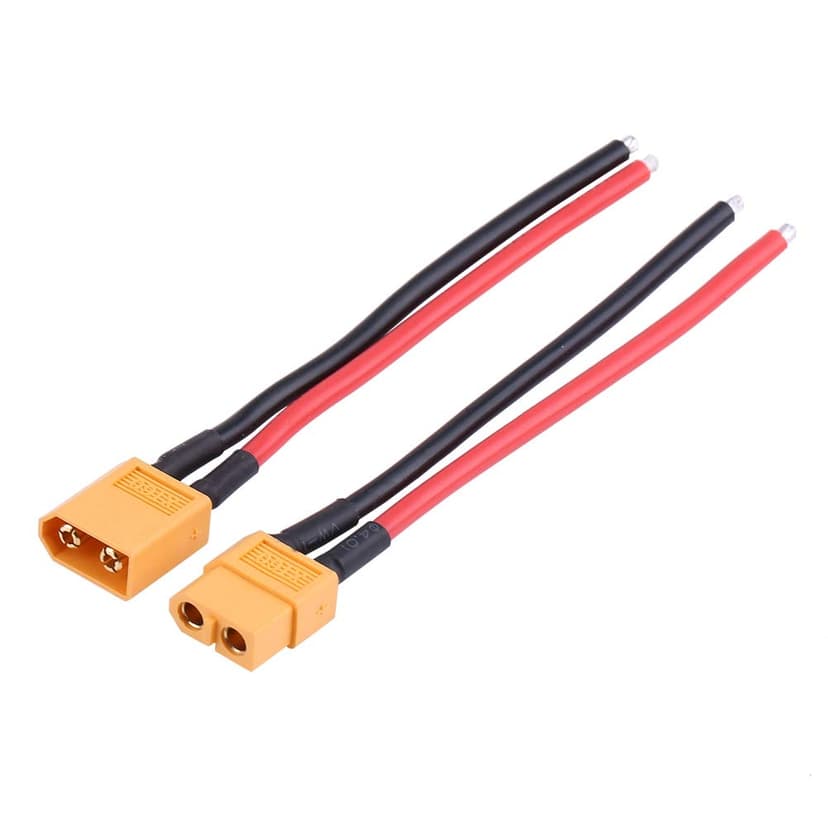
Figure: Series connection using male-female jumper wires
Series Resistance
Total resistance is sum of individual resistances:
R_total = R1 + R2 + R3 + ... + RnExample: Three resistors (10Ω, 20Ω, 30Ω) in series
R_total = 10 + 20 + 30 = 60ΩSeries Current
Since current is the same everywhere:
I = V_total / R_totalExample: 12V battery with 60Ω total resistance
I = 12V / 60Ω = 0.2A = 200mACurrent through each resistor: 200mA
Series Voltage Division
Voltage divides proportionally to resistance:
V1 = V_total × (R1 / R_total)
V2 = V_total × (R2 / R_total)
V3 = V_total × (R3 / R_total)
Example from above:
V1 = 12V × (10/60) = 2V
V2 = 12V × (20/60) = 4V
V3 = 12V × (30/60) = 6V
Check: 2 + 4 + 6 = 12V ✓
Series Battery Connection
Batteries in series add voltages:
3 × 1.5V alkaline cells in series = 4.5V
2 × 3.7V Li-ion cells in series = 7.4V
4 × 3.7V Li-ion cells in series = 14.8V
Problem: All batteries must be removed if one dies!
Parallel Circuits
Definition and Characteristics
Parallel circuit: Components connected across the same voltage, each with its own path.
        ┌─ Component 1 ─┐
Battery ┤ Component 2 ├ Back to Battery
        └─ Component 3 ─┘
Key characteristics:
| Property | Value |
|---|---|
| Voltage | Same across all components |
| Current | Divides among components |
| Total R | 1/R_total = 1/R1 + 1/R2 + ... |
| Advantage | Failure of one doesn't affect others |
| Disadvantage | More complex, higher total current |
Parallel Resistance
Reciprocal formula:
1/R_total = 1/R1 + 1/R2 + 1/R3 + ...For two resistors:
R_total = (R1 × R2) / (R1 + R2)Example: 30Ω and 60Ω in parallel
R_total = (30 × 60) / (30 + 60)
        = 1800 / 90
        = 20Ω

Check using reciprocal:
1/R = 1/30 + 1/60 = 2/60 + 1/60 = 3/60 = 1/20
So R = 20Ω ✓
Parallel Current Division
Current divides inversely proportional to resistance:
I1 = I_total × (R_total / R1)Example: 12V source with 30Ω and 60Ω in parallel
R_total = 20Ω (from above)
I_total = 12V / 20Ω = 0.6A

I_30Ω = 0.6A × (20/30) = 0.6A × 0.667 = 0.4A
I_60Ω = 0.6A × (20/60) = 0.6A × 0.333 = 0.2A

Check: 0.4A + 0.2A = 0.6A ✓
Parallel Battery Connection
Batteries in parallel increase current capacity but maintain voltage:
2 × 12V 5Ah batteries in parallel = 12V 10Ah
(double the amp-hours, same voltage)
Advantage: Better reliability (one can fail, other carries load) Requirement: All batteries must have same voltage!
Mixed Series-Parallel Circuits
Common Configuration
Most real circuits combine series and parallel:
Analysis Method
Step-by-step approach:
- Simplify parallel sections (find equivalent resistance)
- Add series resistances
- Calculate total current
- Work backwards to find individual currents and voltages
Example: Power Distribution Network
Robot power system:
        ┌─ Motor 1 (6Ω) ─┐
12V ─ Wire(0.2Ω) ┤ Motor 2 (6Ω) ├─ Back
        └─ Motor 3 (6Ω) ─┘
Step 1: Parallel resistance (3 × 6Ω)
1/R_parallel = 1/6 + 1/6 + 1/6 = 3/6 = 1/2
R_parallel = 2Ω
Step 2: Total resistance
R_total = R_wire + R_parallel = 0.2Ω + 2Ω = 2.2ΩStep 3: Total current
I_total = 12V / 2.2Ω = 5.45AStep 4: Voltage at parallel motors
V_motors = 12V - (5.45A × 0.2Ω) = 12V - 1.09V = 10.91VStep 5: Current in each motor
I_each = 10.91V / 6Ω = 1.82A per motor
Check: 1.82 + 1.82 + 1.82 = 5.45A ✓
Practical Robotic Examples
Example 1: LED Indicator Array
Requirement: 4 indicator LEDs (red, green, yellow, blue) all powered from 5V supply
Approach: Parallel with individual current-limiting resistors
        ┌─ R_red ─ LED_red ─┐
5V ─────┤ R_green ─ LED_green ├─ GND
        ├ R_yellow ─ LED_yellow ├
        └─ R_blue ─ LED_blue ─┘
Design:
- Each LED: 2V forward voltage, 20mA current
- Resistor needed: (5V - 2V) / 20mA = 150Ω
- Use 150Ω or 180Ω resistor for each
Total current: 4 × 20mA = 80mA (acceptable)

Figure: Parallel LED circuit with individual resistors for current limiting
Example 2: Sensor Network
Requirement: Multiple sensors (each 50Ω equivalent) need 3.3V from microcontroller GPIO
Problem: GPIO can only source 20mA max
Solution: Don't put sensors directly in parallel; use buffer
MCU (3.3V) → OpAmp Buffer → Parallel Sensors
            (can drive 100mA)
Example 3: Motor with Brake and Capacitor
Circuit:
12V ─ MOSFET ─ Motor ─┬─ GND
                      │
                   Capacitor
                    (parallel)
Purpose: Capacitor provides short-term current during switching
Component Combinations in Robotics
Series Applications
When to use series:
- LEDs in long chains (voltage multiplication)
- Batteries to increase voltage
- Resistors for high precision (stack tolerances)
- Inductors for high-frequency filtering
Parallel Applications
When to use parallel:
- Motors for redundancy
- Batteries for capacity
- Capacitors for energy storage
- Resistors for power handling
Series-Parallel Design Checklist
Circuit Design Checklist
Before implementing:
- Calculate total current draw
- Verify power supply capacity
- Design for load distribution
- Plan for component failures
- Add safety margins (30-50%)
During implementation:
- Test series connections first
- Verify voltages at each node
- Measure actual currents
- Check for hot components
After assembly:
- Verify all voltages with multimeter
- Measure total and branch currents
- Monitor for 30 minutes idle
- Test under full load
Summary
Series Circuits:
- ✓ Single path for current
- ✓ Current same everywhere, voltage divides
- ✓ Total R = sum of individual resistances
- ✓ One failure breaks circuit
- ✓ Good for voltage multiplication (batteries)
Parallel Circuits:
- ✓ Multiple paths for current
- ✓ Voltage same everywhere, current divides
- ✓ Total R = 1/(sum of reciprocals)
- ✓ One failure doesn't affect others
- ✓ Good for capacity and redundancy
Mixed Circuits:
- ✓ Simplify parallel sections first
- ✓ Add series resistances
- ✓ Calculate total current
- ✓ Work backwards for individual values
- ✓ Verify with measurements
How is this guide?