Connectors and Wires
Connector types (XT60, JST, bullet), wire gauges (AWG), insulation, color coding, and proper sizing for robotic circuits
Connectors and Wires
Proper connectors and wire sizing are critical for safety, reliability, and performance. Wrong choices lead to overheating, fires, or system failures.
Wire Gauge Selection
AWG (American Wire Gauge)
Wire size for different currents:
| AWG | Diameter | Current (safe) | Resistance | Best For |
|---|---|---|---|---|
| 28 AWG | 0.3 mm | 0.5 A | High | Signal wires |
| 24 AWG | 0.5 mm | 2 A | Medium | Sensor wires |
| 20 AWG | 0.8 mm | 5 A | Medium | Motor signals |
| 16 AWG | 1.3 mm | 10 A | Low | Power distribution |
| 14 AWG | 1.6 mm | 15 A | Low | Main power |
| 12 AWG | 2.0 mm | 20 A | Very low | High-power systems |
| 10 AWG | 2.6 mm | 30 A | Very low | Heavy-duty |
Rule of thumb:
Derating factor: 80% of table value for safety margin

Example: 16 AWG rated 10A
Safe continuous: 10A × 0.8 = 8A recommended
Voltage Drop Over Wire
V_drop = Current × Resistance × Length

16 AWG (~0.004 Ω/foot):
1 foot @ 5A = 0.02V (acceptable)
10 feet @ 5A = 0.2V (5% of 5V, borderline)

Minimum requirement: < 3% voltage drop
Max length = (3% × Supply V) / (I × wire resistance)
Common Connectors
XT60 (Most Popular)
Current rating: 60A continuous, 150A burst
Voltage: 250V max
Uses: Battery to ESC, PDB

Connector structure:
┌─ Positive (large contact)
├─ Negative (large contact)
└─ Shroud (prevents short circuit)

Advantages:
✓ Cheap (~$1 pair)
✓ Common in drones
✓ Built-in shroud prevents shorts
✓ Easy soldering

Disadvantages:
✗ Not suitable for > 60A continuous
✗ Can wear out quickly with frequent plugging
Figure: XT60 connectors - Most popular choice for battery connections in robotics
XT90 (High-Current)
Current rating: 90A continuous, 200A burst
Voltage: 250V max

Advantages:
✓ Higher current than XT60
✓ Spark-prevention circuit (optional)
✓ Robust contacts

Disadvantages:
✗ More expensive ($2-3)
✗ Slightly larger than XT60
JST Connectors
PH series: 2.0mm spacing, small robot applications
XH series: 2.54mm spacing, common in hobby

Current: 2-5A typical (small)
Voltage: 250V

Use: Servo connectors, small battery packs
Advantage: Compact
Disadvantage: Low current, easy to disconnect accidentally
Bullet Connectors
Sizes: 2.0mm, 3.5mm, 5.5mm
Current: 5A (2.0mm) to 30A (5.5mm)
Voltage: 250V

Use: Motor to ESC connections
Simple design, cheap, widely available
Tamiya Connector
Old standard (still used in some applications)
Current: 10A typical
Issues: Unreliable, loose connections
Modern: Avoid, use XT60 instead
Connector Selection by Current
< 2A: JST PH/XH
2-10A: XT60, 3.5mm bullet
10-30A: XT90, 5.5mm bullet, Anderson PowerPole
> 30A: Custom solution, heavy-duty connector
Proper Soldering
Solder Joint Anatomy
Good joint:           Bad joint:
┌──────┐              ┌──┐ ← Insufficient solder
│      │              │ │
└──────┘ Smooth       └─┘ Lumpy/cold joint
Shiny, convex        Dull, concave
Solder Quality
Lead-free (modern):
- Melting point: 217-227°C
- Better for environment
- Slightly harder to work with
Lead-based (old):
- Melting point: 183°C
- Easier to solder
- Health hazard
Soldering Steps
- Heat both parts (connector and wire)
- Apply solder to joint (not directly to iron!)
- Heat until solder flows smoothly
- Remove iron and let cool
- Result: Strong, shiny joint
Common mistakes:
- Using too much solder (makes joint weak)
- Cold joint (solder didn't melt properly)
- Using flux-less solder (weak joints)
Wire Color Coding
Power Distribution
Red: Positive (+)
Black: Negative/Ground (-)
Yellow: Switched power
Orange: Auxiliary power
Control Signals
White: Signal/Clock
Green: Signal/Data
Blue: Signal ground reference
Best Practice for Robotics
Main power:
- Red thick wire from battery +
- Black thick wire from battery -

Motor connections:
- Power lines in red/black
- Signal wires in smaller gauge
- Label wires with shrink tube
Wire Harness Construction
Bundling
Organize wires in same direction:
Good:   Wires bundled together, velcro strap
        ↓
Bad:    Wires scattered all over robot
        ↗ ↙ ↖
Labeling
Use heat shrink tube with labels:
Format: [FUNCTION]-[PIN]

Examples:
- MOT_LEFT_PWM-D3
- BATT_POS (marked with red)
- I2C_SDA-A4

Benefits:
✓ Easy troubleshooting
✓ Maintenance simplification
✓ Documentation
Strain Relief
Prevent wire breakage at connector:
Without relief: Wire flexes right at connector → breaks
    [Connector]
         ↓ ← Flexing here

With relief: Strain distributed over longer area
    [Connector]
    [→Strain relief boot→]
              ↓ ← Bending here (better)
Prototyping Connectors
Jumper Wires
Jumper wires are essential for prototyping and breadboard connections:
Types:
- Male-to-Male (M-M): Breadboard connections
- Male-to-Female (M-F): Arduino to breadboard
- Female-to-Female (F-F): Arduino to sensors

Typical gauge: 24 AWG (signal level only)
Current limit: < 2A
Length: 10cm, 20cm, 30cm standard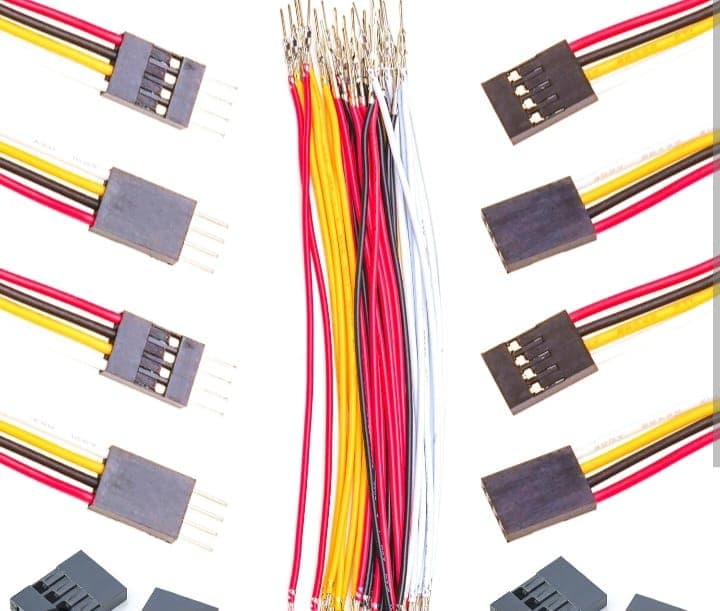
Figure: Jumper wires - Essential for prototyping and testing circuits
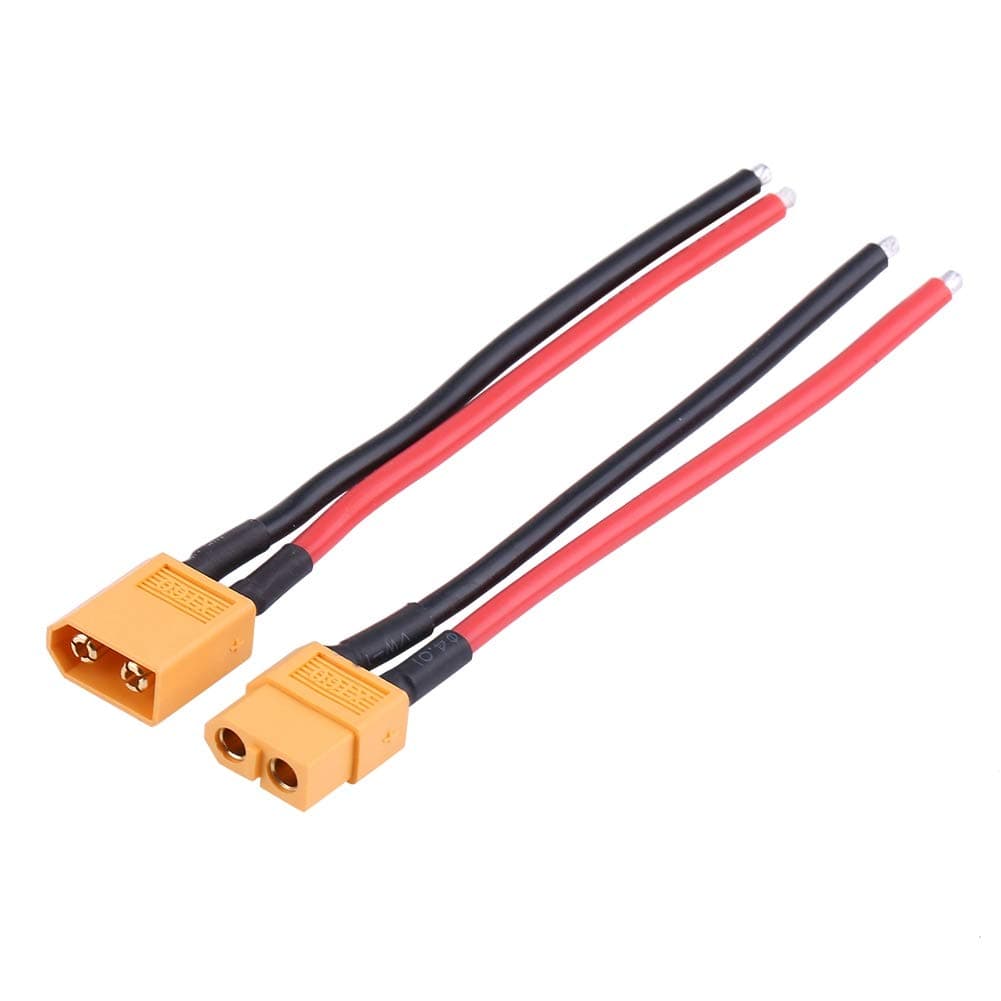
Figure: Male and female connector types for versatile connections
Connector Converters
Adapter boards for converting between different connector types:
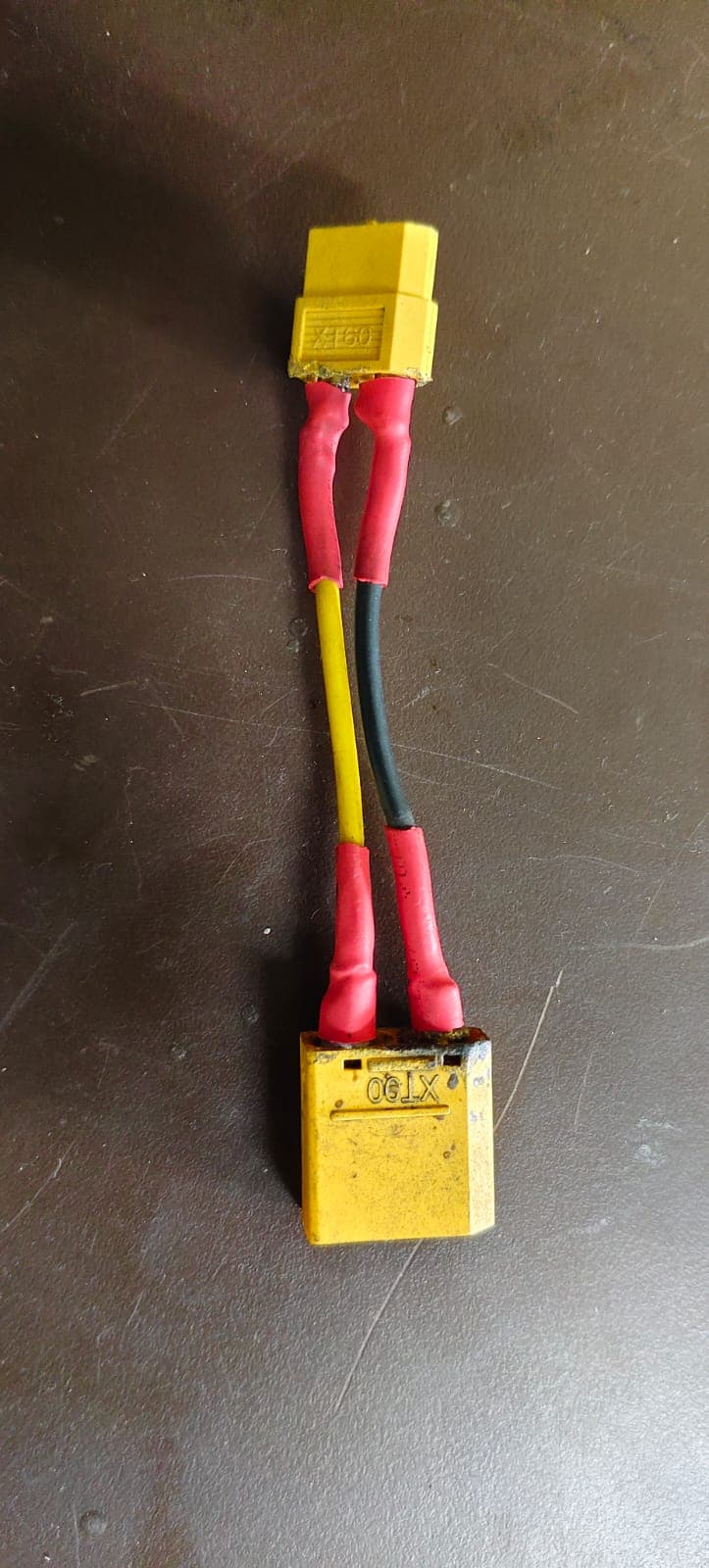
Figure: Connector converters - Useful for interfacing different connector standards
Prototyping vs Production
Jumper wires are great for testing but not suitable for final robot builds. Use proper soldered connections or screw terminals for permanent installations.
Connector Maintenance
Oxidation Prevention
Over time, contacts oxidize (turn green/white):
Contact cleaner: Use electronics-grade contact spray
Clean annually: Especially if robot not used regularly
Protecting spray: Thin coating prevents oxidation
Preventing Loose Connections
Problem: Connection feels loose after many cycles

Solutions:
1. Check solder joint (might be cold)
2. Tighten connector screw (if applicable)
3. Use conformal coating (prevents corrosion)
4. Replace connector (if worn out)
Safety Practices
Electrical Safety
High-current hazards:
- ⚠️ Never short battery terminals directly
- ⚠️ Use fuses/breakers for over-current protection
- ⚠️ Never modify high-current connectors while powered
- ⚠️ Keep water away from high-voltage systems (> 30V)
Safe practices: ✓ Always use correct wire gauge ✓ Check connectors before plugging in ✓ Use insulated tools for high-voltage work ✓ Wear insulated gloves for > 50V systems ✓ Never work on live circuits without need
Common Connector Problems
| Problem | Cause | Fix |
|---|---|---|
| Loose connection | Worn connector, cold solder | Replace connector or re-solder |
| Connector won't fit | Bent pins | Gently straighten or replace |
| Melted connector | Excessive current | Use larger gauge wire, bigger connector |
| Green oxidation | Exposure to moisture | Clean with contact cleaner |
| Intermittent connection | Corroded contact | Clean terminals, apply dielectric grease |
Checklist for Connector Installation
- Correct wire gauge for current
- Connector rated for voltage and current
- Solder joint shiny and smooth
- No exposed copper (safety hazard)
- Proper heat shrink or insulation
- Wire labeled clearly
- Strain relief installed
- Connection tested before deployment
- Fuse/breaker rated appropriately
- Polarity correct (+ to +, − to −)
Summary
Wire Gauge Selection:
✓ 28 AWG: Signal only ✓ 20 AWG: Servo/sensor power ✓ 16 AWG: Motor power (< 10A) ✓ 12 AWG: High-current (> 10A) ✓ Always derate to 80% of table value
Connector Selection:
✓ < 10A: XT60 (standard for small robots) ✓ 10-50A: XT90 (medium-power robots) ✓ Servo/logic: JST connectors ✓ > 50A: Heavy-duty connectors
Best Practices:
✓ Use correct gauge wire ✓ Solder properly (shiny joint) ✓ Label all connections ✓ Add strain relief ✓ Check polarity before plugging ✓ Maintain regularly (clean contacts)
How is this guide?