Motor Types and Characteristics
Understanding DC motors, servo motors, stepper motors, and BLDC motors for robotic applications
Motor Types and Characteristics
Motors are the actuators of robotics - they convert electrical energy into mechanical motion. Different motor types have vastly different characteristics, control requirements, and applications. Choosing the right motor is critical for successful robot design.
Motor Comparison Overview
| Motor Type | Voltage | Speed (RPM) | Torque | Control | Best For |
|---|---|---|---|---|---|
| DC Brushed | 3-24V | 5K-20K | Medium | Voltage/PWM | Mobile robots, wheels |
| DC Brushless (BLDC) | 3-48V | 1K-10K | Medium-High | PWM/3-phase | Drones, efficient systems |
| Servo | 4.8-7.2V | 300-500 (controlled) | Medium | PWM pulse | Arm joints, steering |
| Stepper | 12-24V | 100-1000 (stepped) | Low-Medium | Step pulses | Positioning, printing |
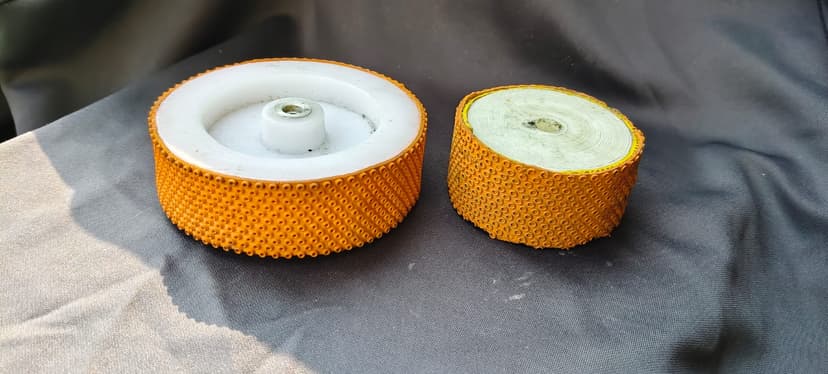
Figure: Common motor types in robotics applications
DC Brushed Motors
How It Works
Components:
- Stator: Permanent magnets
- Rotor (Armature): Rotating coil
- Commutator: Split ring conducts current
- Brushes: Carbon contacts for current switching
- Shaft: Output rotation
Operation:
Voltage applied → Current through coil → Magnetic field interaction
→ Rotation → Commutator switches current direction → Continuous rotation
Characteristics
Advantages:
- Simple control (just apply voltage)
- Cheap
- High starting torque
- Wide voltage range
- Robust and forgiving
Disadvantages:
- Brush wear (limited life 1000-2000 hours)
- Electrical noise
- Less efficient (70-80%)
- Magnetic interference
- Heat generation
Specifications
Typical ratings for robotics:
| Size | Voltage | Speed | Torque | Current | Use |
|---|---|---|---|---|---|
| Micro | 3-6V | 10K RPM | 0.1 N·m | 100-500mA | Small wheels |
| Small | 6-12V | 5K RPM | 0.5 N·m | 1-3A | Medium robot |
| Large | 12-24V | 3K RPM | 5-10 N·m | 5-20A | Mobile base |
Control Method
Simple: Apply voltage between motor terminals
Motor 0V → Stopped
Motor 6V → Medium speed
Motor 12V → Full speed
Motor -12V → Reverse direction

Using PWM:
0% PWM = 0V effective
50% PWM = 6V effective (assuming 12V input)
100% PWM = 12V effective
Example Application: Mobile Robot Wheel
Requirements: 12V robot wheel motor
Specifications found:
- Rated: 12V, 200 RPM, 5 N·m
- Free-running: 500mA
- Stalled: 8A

Wheel diameter: 0.1m (0.314m circumference)

Speed:
v = RPM × circumference / 60
  = 200 × 0.314 / 60
  = 1.05 m/s

Torque:
5 N·m at wheel → Force = 5 / 0.05 (radius) = 100 N
Max pull force: 100 N (≈ 10 kg climbing horizontally)
Figure: DC motor directly coupled to robot wheel for mobile base
Servo Motors
How It Works
Internal components:
- DC motor (usually)
- Gearbox (high reduction, 50:1 to 300:1)
- Position feedback (potentiometer)
- Control circuit (compares desired vs actual position)
Operation:
PWM signal (1-2 ms pulse) → Control circuit → Adjusts motor power
→ Gearbox drives output shaft → Feedback resistor measures position
→ If not at target: motor adjusts → Once at position: holds
Characteristics
Advantages:
- Position feedback (knows where it is)
- Holds position even when load applied
- Easy PWM control
- Compact
- Good precision
Disadvantages:
- Cannot do continuous rotation (standard servos)
- Limited speed (low RPM due to gearbox)
- Limited power (soft gears)
- More expensive than DC motors
- Torque drops as speed increases
PWM Control Signal
Standard servo control:
Pulse width determines position:
1 ms pulse = -90° (full left)
1.5 ms pulse = 0° (center)
2 ms pulse = +90° (full right)

Pulse must repeat at 50 Hz (every 20 ms)
Specifications
Common sizes:
| Size | Weight | Torque | Speed | Voltage | Cost |
|---|---|---|---|---|---|
| Micro (SG90) | 9g | 1.6 kg·cm | 60°/0.1s | 4.8-6V | $3 |
| Standard | 35g | 10 kg·cm | 60°/0.2s | 4.8-6V | $5 |
| Heavy-duty | 60g | 25 kg·cm | 60°/0.15s | 6-7.2V | $15 |
Example Application: Robot Arm Joint
5-joint arm with servo control:
For each joint:
- Use standard 10 kg·cm servo
- Mount servo in joint housing
- Attach link via servo horn
- Control with PWM from microcontroller

Position command:
uint8_t angle = 90;  // 0-180 degrees
pulse_width = 1000 + (angle * 5.56);  // microseconds
Stepper Motors
How It Works
Structure:
- Stator coils (4 usually)
- Rotor with permanent magnet teeth
- Each coil step = small rotation (1.8° typical for NEMA 17)
Operation:
Pulse sequence on coil 1 → Rotor rotates 1.8°
Pulse sequence on coil 2 → Rotor rotates next 1.8°
(Continue for full rotation)

Step 0°, 1.8°, 3.6°, 5.4°, ...
Characteristics
Advantages:
- Exact positioning without feedback
- Can hold position indefinitely
- Precise angular control
- No drift
- Works at very low speeds
Disadvantages:
- Complex control circuit required
- Cannot go very fast
- Must have driver IC
- Can miss steps if overloaded
- Cogging (not smooth rotation)
- Heat generation at idle (holding current)
Specifications
Common stepper motors for robotics:
| Type | Step Angle | Steps/Rev | Torque | Voltage | Current |
|---|---|---|---|---|---|
| NEMA 11 | 1.8° | 200 | 0.2 N·m | 12V | 0.4A |
| NEMA 17 | 1.8° | 200 | 0.4 N·m | 12-24V | 1.2-2A |
| NEMA 23 | 1.8° | 200 | 1.9 N·m | 24-48V | 3A |
| NEMA 34 | 1.8° | 200 | 8.6 N·m | 48V | 6A |
Control Signals
Two approaches:
1. Simple direction/speed:
DIR pin: 0 = clockwise, 1 = counter-clockwise
STEP pin: Pulse = one step
Frequency determines speed

Example: 1000 Hz = 1000 steps/sec
For NEMA 17: 1000/200 = 5 revolutions/sec = 300 RPM
2. Micro-stepping:
Divides each step into smaller steps (1/2, 1/4, 1/8, 1/16)
Results in:
- Smoother motion
- Less cogging
- More precise positioning
- Takes more processing power
Example Application: 3D Printer Axis
X-axis stepper with 200 steps/rev and 5mm pitch leadscrew:
Each step moves: 5mm / 200 = 0.025 mm = 25 micrometers
Very precise!

With 1/16 micro-stepping:
25 micrometers / 16 = 1.56 micrometers per sub-step!
BLDC (Brushless DC) Motors
How It Works
Components:
- Stator coils (fixed)
- Rotor permanent magnets
- Hall effect sensors
- Electronic commutation
Operation:
Hall sensors detect magnet position → Drive electronics
→ Energize appropriate stator coil → Magnetic repulsion/attraction
→ Smooth continuous rotation (not stepped like stepper)
Characteristics
Advantages:
- High efficiency (85-92%)
- Long life (no brushes, 10K+ hours)
- Smooth operation
- High speed possible
- Less electrical noise
- Compact for power
Disadvantages:
- Complex drive circuit required (ESC)
- More expensive
- Harder to control precisely
- Requires Hall sensors or back-EMF detection
Motor Classes
Outrunner (hollow can):
- Can spins with rotor magnets
- Stator inside
- High torque, lower RPM
- Used in drones, direct drives
Inrunner:
- Rotor spins inside stator
- Higher RPM, lower torque
- Needs gearbox
- Smaller package
Specifications
Typical BLDC for robotics:
| Type | KV | Voltage | RPM | Torque | Current | Use |
|---|---|---|---|---|---|---|
| Micro drone | 2300 KV | 3.7-11.1V | Varies with V | Low | 2-10A | Quadcopter |
| Medium | 1000 KV | 12V | 12K | Medium | 5-15A | Robot drive |
| Large | 500 KV | 24V | 12K | High | 20-40A | Large robot |
KV rating: RPM per volt (unloaded)
1000 KV at 12V = 12,000 RPM no-load
Actual RPM = (Voltage - Back_EMF) × KV
Motor Selection Flowchart
Summary
DC Brushed Motors:
- ✓ Simplest control, cheapest
- ✓ Good for wheels and constant rotation
- ✓ Limited life due to brush wear
Servo Motors:
- ✓ Position feedback, holds position
- ✓ Perfect for arm joints and steering
- ✓ Limited to ±90° range (usually)
Stepper Motors:
- ✓ Exact positioning without feedback
- ✓ Great for 3D printers, CNC
- ✓ Needs complex driver circuit
BLDC Motors:
- ✓ High efficiency and long life
- ✓ Smooth high-speed operation
- ✓ Needs ESC (more expensive)
Practical Recommendation:
- Starting robot: DC motors for wheels + servos for joints
- High-performance: BLDC motors with proper driver
- Precise positioning: Stepper motors with microstepping
How is this guide?